Thursday, November 21, 2013

Team Communism

North Korea, despite threatening the U.S., is continuing life as normally as possible. “Life,” can’t really be considered normal when we are talking about North Korea, but it is continuing nonetheless. The U.S. and other allies of the western world are portrayed as the bad guys to the citizens of North Korea and they continue to accept the propaganda as the truth even though it has very adverse effects. North Korea has 1.1 million troops and 10,000 artillery pieces capable of hitting South Korea’s capital of Seoul. Obviously North Korea is focused mainly on their military, even though their economy is what really needs help. A good public service job in North Korea makes about 3,000 won a month, or about 50 American cents, and with no work being put into helping the economy, this situation looks to not be improving anytime soon.
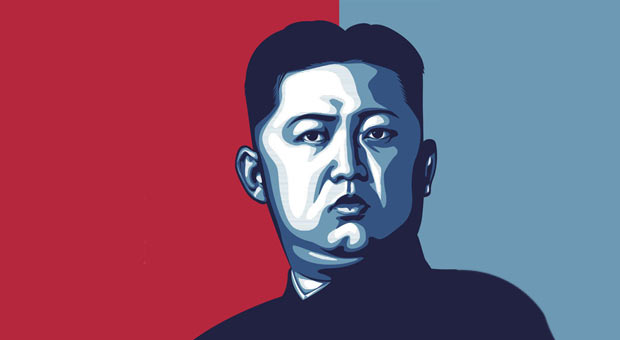
Question: Why do you think that Korean citizens accept this to be the 'norm'?
"Inside the Cult of Kim; North Korean Tensions." The Economist (US) 6 Apr. 2013: 47-48. Print.
A Volcano Erupts

                Mr. Correa, president of Ecuador, authorized drilling for oil in Yasuni National Park in the Amazon Rainforest.  This angered the environmentalists because it was bad for the environment.  Also, Mr. Correa was already using the money for anti-poverty programs. Mr. Correa blamed Chevron for a tar pit, created by the drilling.  A plan was formed to fix the tar pit.  The plan made in 1995 stated that the share of remediation work that Texaco (an American oil retain brand) was supposed to perform.  Mr. Correa claims that the site has been neglected since 1986.  This is relevant to economics because it reduced the supply in oil while the demand stayed the same, raising the price of oil.  The money used for fixing the tar pit was taken from the anti-poverty programs. 

Question: What would you do in this situation?

"A Volcano Erupts." The Economist 12 Oct. 2013: 48+. Web.

Shawna Coyle and Emily Haeder


Wednesday, November 20, 2013

Bulgaria's Crisis: Poverty Protests

In February Bulgaria's unemployment went above 12% which is the highest it has been since 2005. Also, over 22% of Bulgaria's population lives below the poverty line. These statistics are merely numbers that may not mean anything to but it means everything to the people living in Bulgaria. The people here blame the government system for their country’s poverty so they are acting out in extreme ways as protest. For example, it has become almost common for people to set themselves on fire to show their hatred for the government. In fact, an average of 7.4 self-immolations occur each year. We can see in this example that the government has not been doing anything to help their citizens to improve their quality of living and current issues at hand. Due to this there is extreme poverty which results in desperate demonstrations such as self-immolations. Do you think this is an effective way to protest the government? Why or why not? What can the government do to stop these demonstrations and improve their country’s well being? Kjerstin Williams and Tate Green Period 5 Sofia. "Bulgaria's Crisis: Poverty Protests." The Economist 406.8828 (1843): 60. Web.

Saturday, November 16, 2013

We experience the Tragedy of the Commons on a daily basis.
Welcome to the Brandon Valley Econ blog! We will use this blog to discuss economic concepts, and relate these concepts to current or historical events.

Please respond to the following prompt. Briefly describe one of the concepts that we have learned about this year in economics, and
discuss how you have been able to relate this concept to the real world. Reference events that have occurred in your own life, and/or current events.